 The Unseen Struggle
Behind many polished results are countless unseen struggles, and often these terminate in frustration. When I wrote about a wandering ant exhibit at the Tate Modern, I described the enlightenment that came from “the increased realization, as one moved closer, of how they were made, aided by a description on the wall.” The unseen struggle I refer to here was not that of the ants, but of knowing what to call the card on the wall.
I searched museum and art sites and asked people, including making phone calls to a museum. Finally I gave up and published my blog post, but I never completely forgot my quest. Everything has a name.
Solutions Are Found When You Least Expect Them
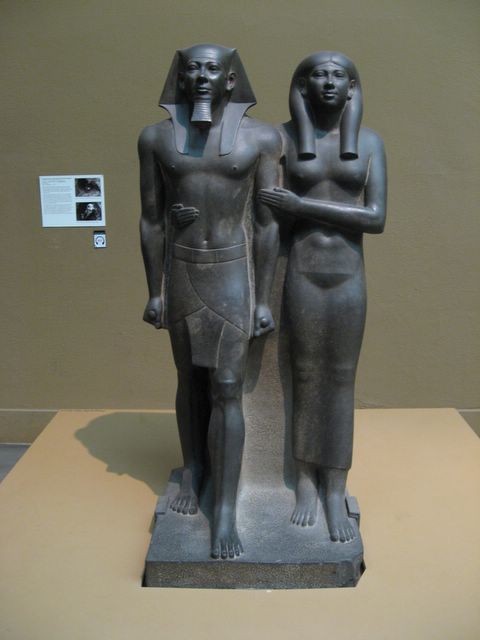
This week I was a parent chaperone on my 4th grade daughter’s field trip to the Egyptian wing of the Boston Museum of Fine Arts. We had a great docent and 2 docents-in-training who accompanied us. I learned a lot from them about the rigorous training docents receive (none of which is online). As we were leaving the museum, my quest from months ago popped into my head and I asked someone at the information desk what the cards on the walls are called. She said that she didn’t know, and, undaunted, I asked the person next to her, who said “wall text”. This was confirmed by another museum staffer.
Cautiously elated, I searched on “wall text” to mixed results, but “museum wall text” confirmed that this was indeed what the cards are called. I further learned that “European museums used wall text before Americans did. In an excellent essay devoted to wall text in the collection What Makes a Great Exhibition? Ingrid Schaffner writes that in 1857 the British House of Commons passed a ‘rule’ that in national museums objects would be accompanied by ‘a brief Description thereof, with the view of conveying useful Information to the Public, and of sparing them the expense of a Catalogue.’ (Schaffner quotes from a 1957 pamphlet by F.J. North, Museum Labels: Handbook for Museum Curators. Bet that was a page-turner.) By 1890, says Schaffner, labels were printed for general distribution. They regularly ran to 300 words and ‘threatened to turn exhibition displays into textbooks.'”
The Happy Ending
1) People with the right expertise are adept at dealing with incomplete information. The Internet is a wonderful resource as long as you know what to call something.
2) People appreciate feedback, like the museum staffer who saw my face light up. The Internet never knows or cares if a mission was satisfactorily accomplished.
3) Persistence pays off eventually. Since I received positive feedback on my last use of lyrics, I will quote from Don Quixote: This is my quest; To follow that star; No matter how hopeless; No matter how far.
4) Informal learning happens when you least expect it.
Lisa,
Interesting and now I know what to call those cardboard signs at museums.
It is so fascinating how informal knowledge surrounds us if we look for it. The idea of museum wall text is one such example. Imagine if organizations created “corporate wall text.” How much informal learning would result from that simple step. (maybe schools call that bulletin boards.)
You also make a wonderful point that when one searches, they need to be comfortable with a degree of incompleteness. The Internet is full of back alleys, dead-end streets and misinformation. It takes a real expert or “trooper” to wade through the data and information to find the knowledge one seeks.
Long live informal learning…in blogs, wikis and museum wall text.
Good for you for asking, too often people are intimidated to ask, perhaps having your daughter there stimulated the inquiry. I find when I am with children, I ask lots of questions to help them know it’s ok to ask, evaluate the answer, and as you did, pursue further. Brava! Now my associations are stimulated to wonder relationships to Graffiti and cave paintings, visual communication is quite a large domain.